Retaining Walls in Calgary NW
Segmental wall systems built for Calgary's freeze-thaw climate.
Get a Free Estimate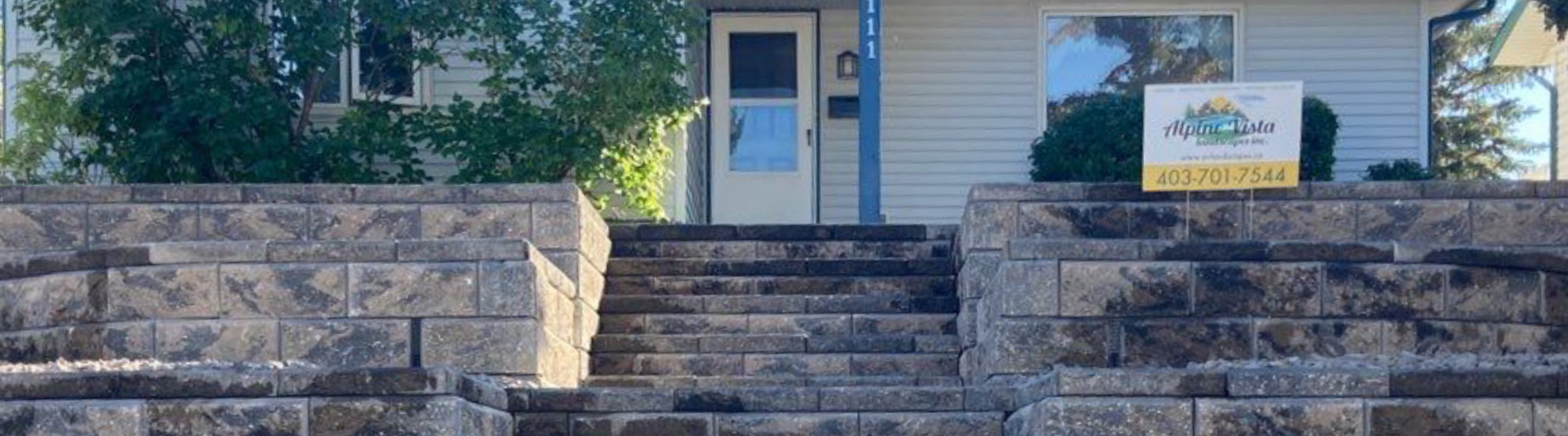
Segmental wall systems built for Calgary's freeze-thaw climate.
Get a Free EstimateEvery wall we build is designed around the way each yard actually moves through Calgary's freeze-thaw winters. We start with a laser-measured topography and a soil depth test before a single block is laid, which most contractors skip at the estimate stage. Our team holds Allan Block certification and an AB Advanced Residential Contractor designation, and we stand behind every wall with a two-year warranty.
A segmental retaining wall is built from individual precast concrete blocks, dry-stacked and engineered to hold back soil, manage grade changes, and redirect drainage. Unlike poured concrete, each block is set independently, which means the wall can flex with Calgary's freeze-thaw cycles instead of cracking under them. Segmental walls are the standard for residential hardscaping in this climate because they handle ground movement without failing, and individual sections can be repaired without tearing out the entire structure.
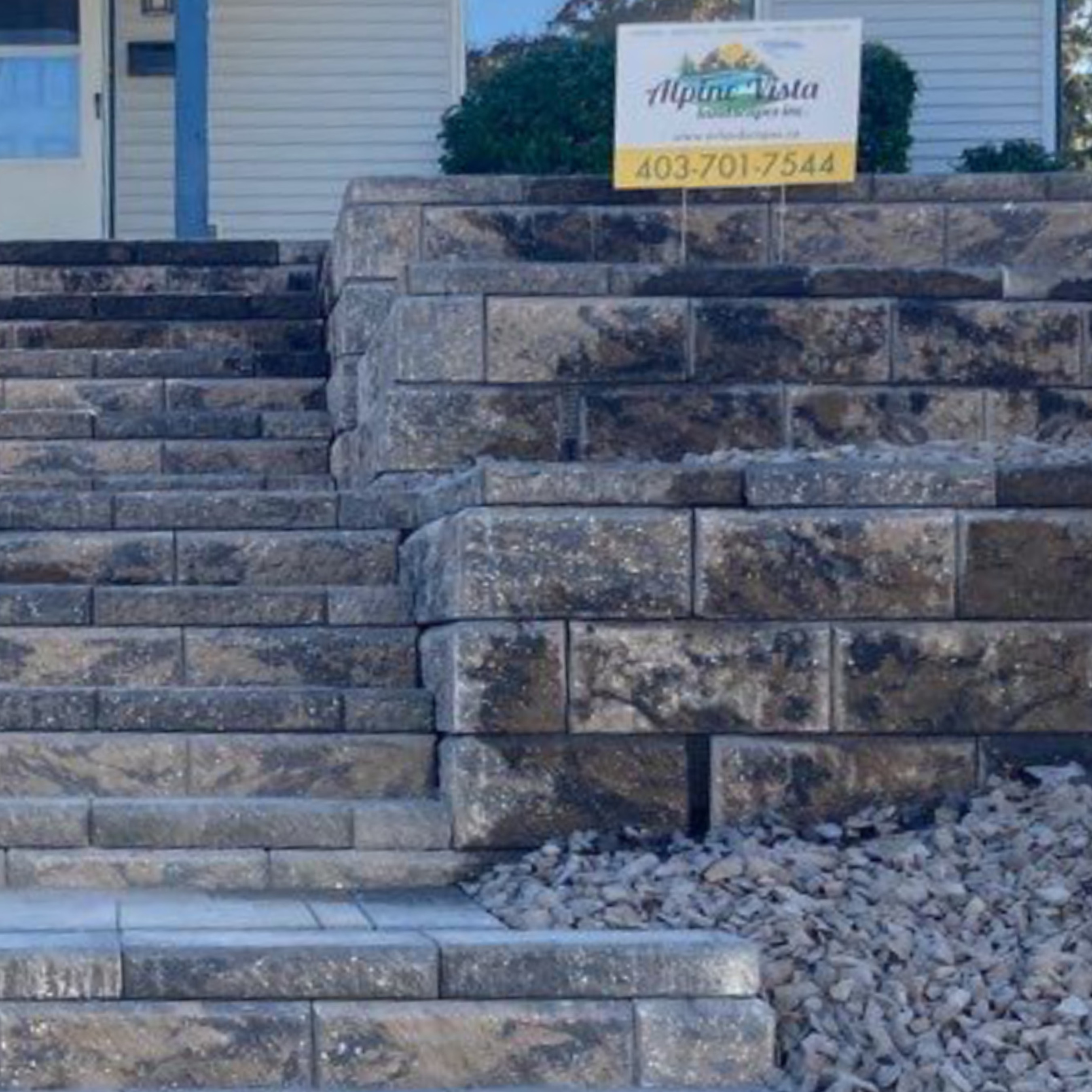
What Goes Into an
Alpine Vista Retaining Wall
Before any wall design begins, we figure out what the wall actually needs to do. A retaining wall built as a backyard accent is designed differently than one built to manage drainage or grade.
We walk the site with a laser level to map topography, test soil depth so the quote reflects real ground conditions, measure access for equipment, and confirm utility locates before any digging is planned.
Most contractors skip this at the estimate stage. We do it on every project.
Every wall is built on a trench with a minimum 6-inch base depth, a 6-inch heel and toe on either side of the stone, and a minimum 6 inches of wall embedment. This puts the wall on stable, non-expandable soil so it does not heave as the ground freezes and thaws.
Each course is set with a laser level for accuracy, not a string line. The difference shows up in how straight and consistent the wall stays over time.
Geogrid reinforcement is used on every wall unless a client specifically requests otherwise. It is the part of the build most often skipped because of the extra excavation it requires.
Every wall gets a 1-foot drainage zone of drain rock directly behind it, with drain pipe at the base daylighting every 8 to 10 feet. Drainage failure is one of the most common reasons retaining walls fail in Calgary.
Wall caps are cut to the correct shape for each section and glued down. This is a standard step we never skip, even though it is common to see it skipped on other builds.
Our crew holds Allan Block certification, and Alpine Vista carries an AB Advanced Residential Contractor designation, with over eight years of experience building to and beyond those standards. We source materials through Calgary's three primary hardscape suppliers, working directly with Belgard and Barkman representatives to make sure every project gets consistent, quality-graded product.
During a recent retaining wall build in Ranchlands, NW Calgary, a representative from Allan Block visited the site and approved the work firsthand. That kind of recognition does not come from building to the minimum standard.
Calgary's soil freezes deep in winter and thaws unpredictably in spring. That cycle puts consistent pressure on anything built into the ground, including retaining walls. A wall that is not engineered for this movement will not fail dramatically. It will shift gradually. Blocks tilt forward, drainage backs up behind the wall, and within the first couple of years the structure needs to be pulled out and rebuilt.
The problems that cause retaining wall failures in Calgary almost always start below grade, not above it. Insufficient base depth, poor drainage aggregate behind the wall, and inadequate compaction are the three most common reasons walls move. A wall built to the minimum standard will survive Calgary's winters. A wall built beyond the minimum standard will still be straight in fifteen years.
Alpine Vista builds to the higher standard on every project.
Calgary sees up to
30 freeze-thaw cycles
per year.
Every retaining wall
we build accounts
for that.
Segmental Block vs. Poured Concrete vs. Timber and Wood Walls in Calgary
Segmental block outperforms both alternatives in Calgary's climate
and it is the only option that gives you full design flexibility without compromising on structural longevity. Poured concrete and timber walls both have their place in certain applications. A residential retaining wall in NW Calgary is not one of them.
From First Call to Finished Wall
Every project starts with a conversation about what the wall needs to do, not just what it should look like. Accent wall, drainage solution, seating feature, grade change. The goal shapes the design.
We walk the property with a laser level to map topography and grade, test soil depth, check equipment access, and confirm utility locates. This happens before pricing, not after.
We start with the most efficient wall system for the site, then offer alternatives if requested. The quote reflects what we found on-site, not a generic estimate.
Your project manager is off tools and in the office throughout construction, which means there is always a decision-maker you can actually reach when you need one. Every wall is built to the same base, drainage, and reinforcement standard regardless of size or budget.
We walk the finished wall with you and back it with a two-year warranty.
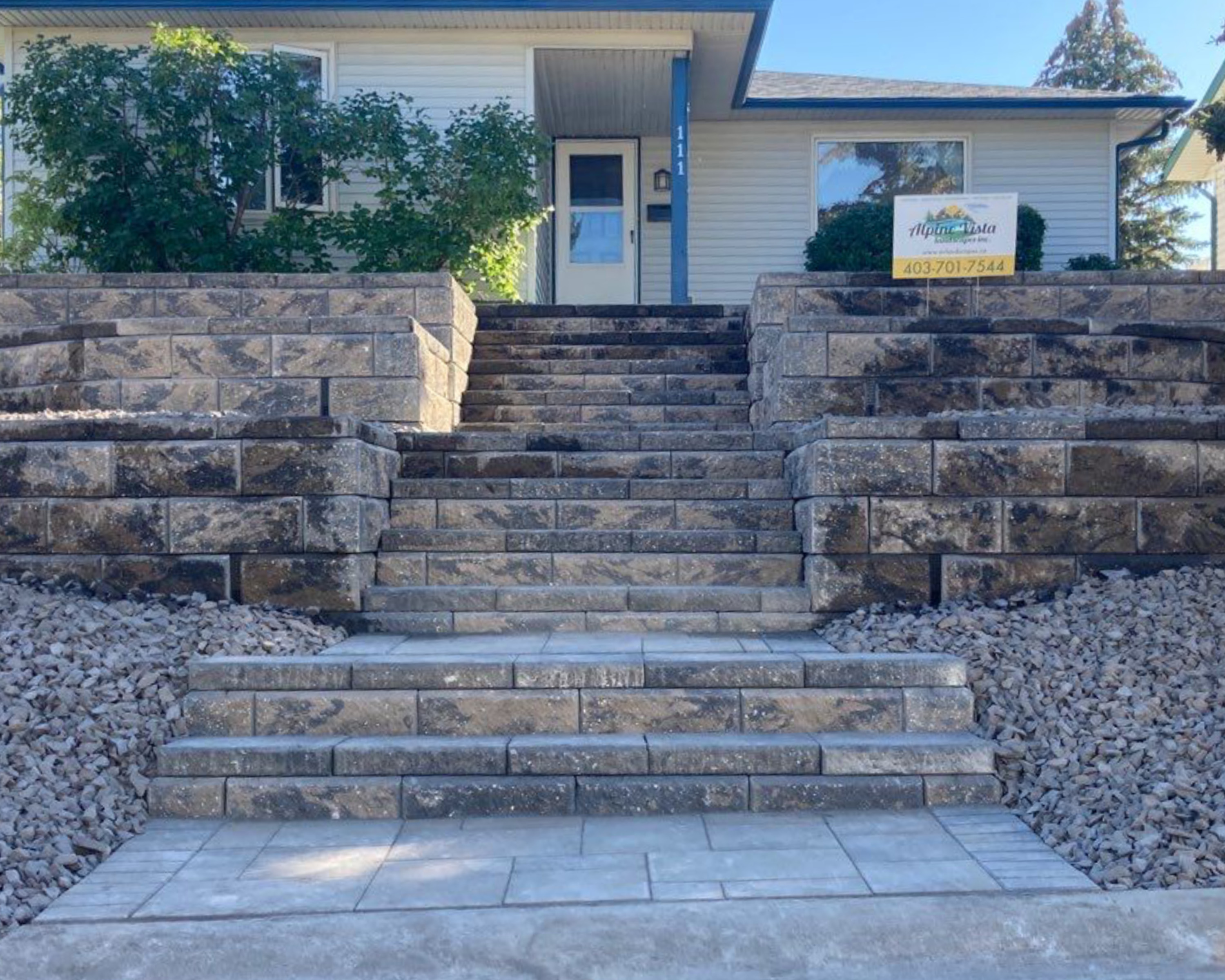
Segmental Retaining Wall Recently Completed
We recently completed a segmental retaining wall project in Ranchlands, NW Calgary, built to this same standard from base to cap.

Alpine Vista is a Belgard Authorized Contractor and an AB Advanced Residential Contractor. Every retaining wall we build uses certified materials installed to manufacturer specifications.
We are proud recipients of the 2025 Consumer's Choice Award for Landscaping in Southern Alberta.

A well-built segmental retaining wall should last 25 to 40 years in Calgary's climate. What we are really installing is a soil retention system, not just a stack of blocks, and the lifespan of that system depends almost entirely on what happens below grade during construction.
The three factors that determine whether a wall holds or fails are base depth, compaction, and drainage. Walls that fail early almost always had one of those three things done to the minimum standard or below it.
A wall with a properly engineered base and drainage aggregate behind it handles freeze-thaw movement year after year without shifting.
A segmental wall is built from individual interlocking blocks that can move independently with the ground. A poured concrete wall is a single rigid structure. In Calgary's soil conditions, rigid structures accumulate stress from freeze-thaw cycles and eventually crack. Segmental block distributes that stress across individual units, which is why it is the standard material for residential retaining walls in this market.
In Calgary, retaining walls over 1.2 metres in height typically require a development permit. Walls under that height generally do not, but setback requirements from property lines still apply. We confirm permit requirements during the quote process so there are no surprises before construction starts.
Retaining wall costs in Calgary are driven by two dimensions that most people do not consider together: How long the wall is and how tall it needs to be. A taller wall requires more excavation, more base material, more drainage aggregate, and more labor, so cost per linear foot rises significantly with height.
The single biggest variable in most residential projects is machine access. Equipment needs a minimum 39-inch gate clearance to reach a backyard. When access is limited, excavation and material handling become manual, and that changes the project cost considerably.
Rather than quoting a number that may not reflect your yard's actual conditions, we provide itemized on-site estimates so you know exactly what you are paying for before any work begins. The consultation is free.
The most common indicators are a sloped yard where usable flat space is limited, soil erosion along a grade change, a neighbor's yard that sits significantly higher or lower than yours, or an existing wall that is showing signs of movement or leaning.
If you are unsure whether your yard needs a structural solution or a grading adjustment, the on-site consultation will give you a clear answer before any money changes hands.
Every retaining wall we build is backed by a two-year warranty. If a wall is going to have an issue, it will show up in that window. In over eight years of building retaining walls across NW Calgary, Alpine Vista has had one warranty callback. It was caused by a soft spot in undisturbed soil that was not identifiable during the original site assessment, a site condition outside our control. We repaired it under warranty at no cost to the client. References are available on request.
Made Beautiful. Made to Last. Request a quote and we will walk through your project scope with you.
Get a Free Estimate
We transform outdoor spaces into functional and sustainable living areas. We help homeowners by planning, building, and maintaining their yards with professional landscaping and hardscaping services.
Phone: 403-701-7544